South African businesses operate in an environment typified by rising tariffs, decarbonisation pressures, loadshedding, grid instability and power quality issues. This has made energy strategy a board-level priority.
When evaluating energy projects, four key considerations are commonly ranked as the priority impact metrics: cost savings, power stability and quality, renewable energy penetration and backup support
Behind-the-meter (BTM) energy solutions, particularly Solar PV and Battery Energy Storage Systems (BESS), offer bankable solutions to all four of these priorities.
Why Behind-the-Meter?
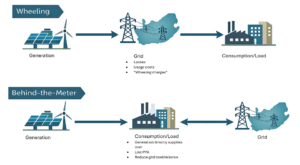
BTM systems generate and deliver electricity at the point of consumption, offering several advantages over off-site, wheeled, alternatives:
- Renewable energy that directly powers on-site operations
- Savings are protected against tariff restructuring (fluctuating grid usage charges won’t impact savings generated by BTM system)
- Protection against grid instability and poor power quality
- Direct operational support during power failures/loadshedding
Each project must still be assessed on a case-by-case basis. Considering tariff structures, physical space, regulatory conditions and environmental factors is imperative to ensuring long-term project bankability.
Encouragingly, BTM technologies are now well established in South Africa and face significantly fewer regulatory hurdles than in previous years.
Solar PV: A Proven Cost Savings Measure
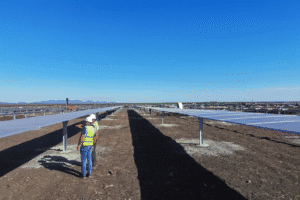
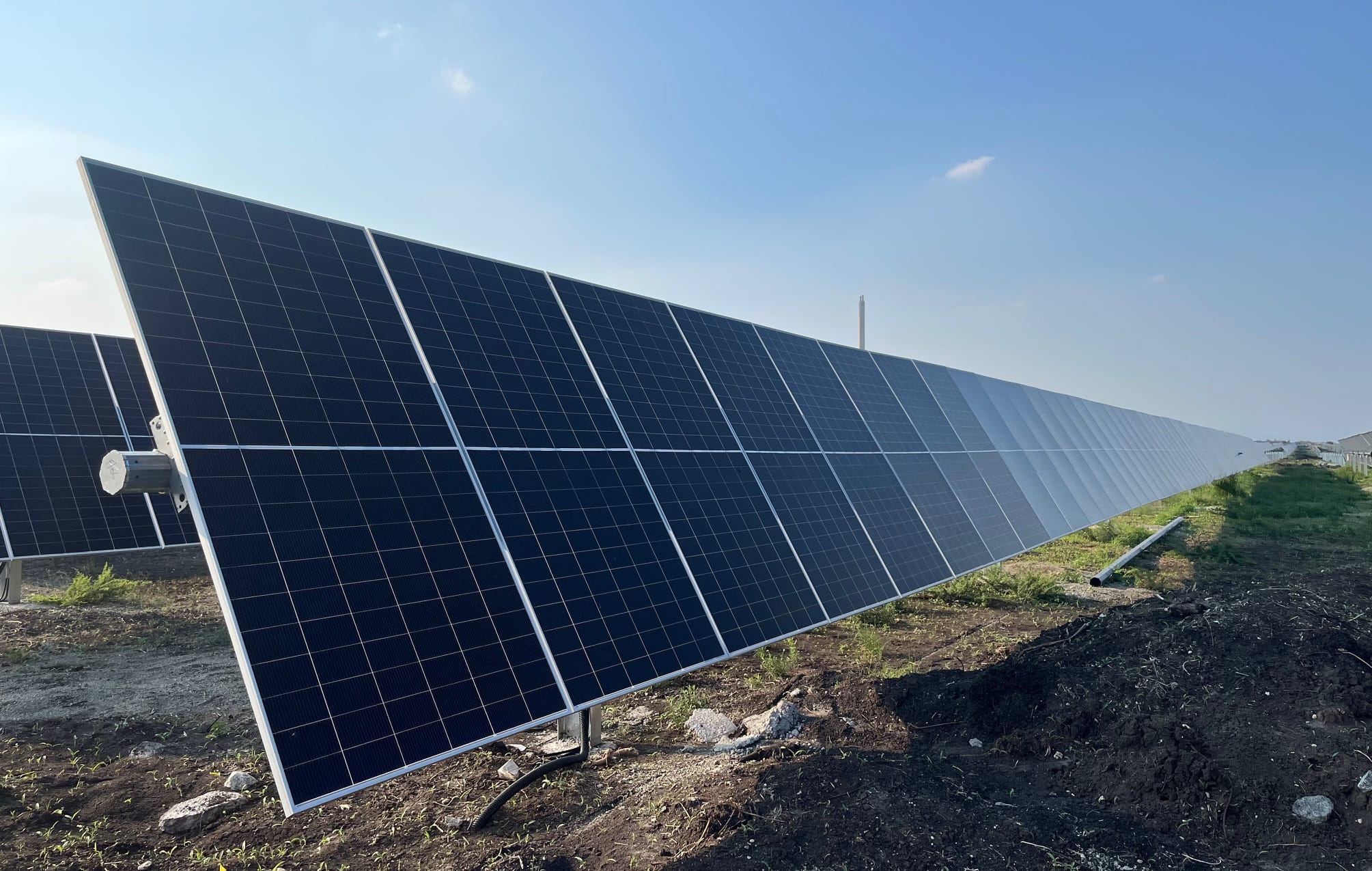
Solar PV remains the foundation of most energy strategies, reducing costs by partially/fully replacing daytime (standard) grid energy consumption with lower cost solar energy generation. Over a 10 to 20 year project, the effective tariff1 of these systems can be up to 80% lower than current standard grid energy charges, depending on your tariff structure.
When assessing a BTM PV project, there are a few key considerations:
- Co-location with and availability of suitable roof or land space
- Contract/project term (typically 10-20yr), due to semi-permanent infrastructure requirements
- Current tariff structure
- Municipal specific regulation and limitations
For energy-intensive operations with significant daytime load, PV alone can provide immediate savings and long-term price certainty.
BESS: The emerging business case
BESS, typically lithium-ion, are becoming a commonplace addition to South African energy strategies due to their rapidly declining price-point and the multiple benefits offered:
- Energy arbitrage (charge off-peak, discharge at peak tariffs)
- Peak demand charge reduction through load shifting/shaving
- Energy security and backup, reducing diesel reliance
- Improved power quality and supply stabilisation
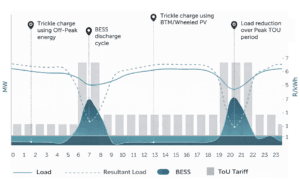
Battery prices have fallen substantially over the past five years, strengthening the case for BTM BESS solutions. Implementing storage early enables businesses to benefit from existing tariff differentials and market pricing. As solar penetration on the grid increases and daytime tariffs decline, the opportunity for BTM arbitrage between standard/off-peak and peak periods is expected to become even more attractive.
Containerised solutions (particularly ≥5MWh systems) offer contract flexibility and scalable deployment tailored to suit operations.
PV + BESS: Complementary technologies
BTM energy strategies are, in most cases, optimised by pairing Solar PV with BESS. Together, these technologies deliver both financial and operational benefits.
Integrating BESS into an energy system allows PV installations to be oversized relative to daytime loads, enabling stored solar energy to be used during peak periods. This approach delivers three key advantages:
- Charging BESS with PV-generated energy increases the effective differential between daytime standard and peak tariffs, enhancing the existing arbitrage opportunity.
- Oversized PV systems no longer need to be curtailed, as excess generation can be stored in BESS, increasing overall renewable energy penetration at the site.
- The PV helps offset the higher demand charges that may arise when cycling BESS for arbitrage purposes. Smart charging integrated with BESS can reduce the effective Demand charges from current levels.
With BESS costs continuing to decline and adoption accelerating across South Africa, the business case for battery storage is approaching the compelling economics that Solar PV achieved in recent years. For many large electricity users, PV combined with BESS is becoming the new standard for energy system architecture.
Funding Models: Lowering the Barrier to Entry
BTM solutions can be structured in two primary ways:
- CAPEX model: Higher upfront investment, stronger long-term savings profile.
- PPA model: No upfront capital expenditure, immediate cost savings and off-balance-sheet treatment in many cases.
The PPA model has been instrumental in accelerating adoption across South Africa by removing capital constraints. Either model can be deployed to tailor the needs and priorities of individual organisations.
Energy Group is currently developing over 1GW of BTM Solar PV and 800 MWh of BTM BESS across several industrial clients in South Africa. These projects are delivering lower energy costs, improved power stability and quality, and increased renewable energy penetration for large electricity users. As tariffs rise and grid conditions remain uncertain, BTM Solar PV and BESS are increasingly forming the backbone of modern energy strategies, enabling businesses to reduce risk, improve operational resilience and take greater control of long-term electricity costs.
Notes
1 The effective tariff (R/kWh), also known as levelized cost of energy (LCOE) for a solar system, refers to the total project expenditure (Capex + Opex) relative to the amount of energy (kWh) the system will produce over its lifetime. For externally funded projects, companies will receive a CPI-linked tariff under a solar power purchase agreement, usually on a 10–15 year contract.